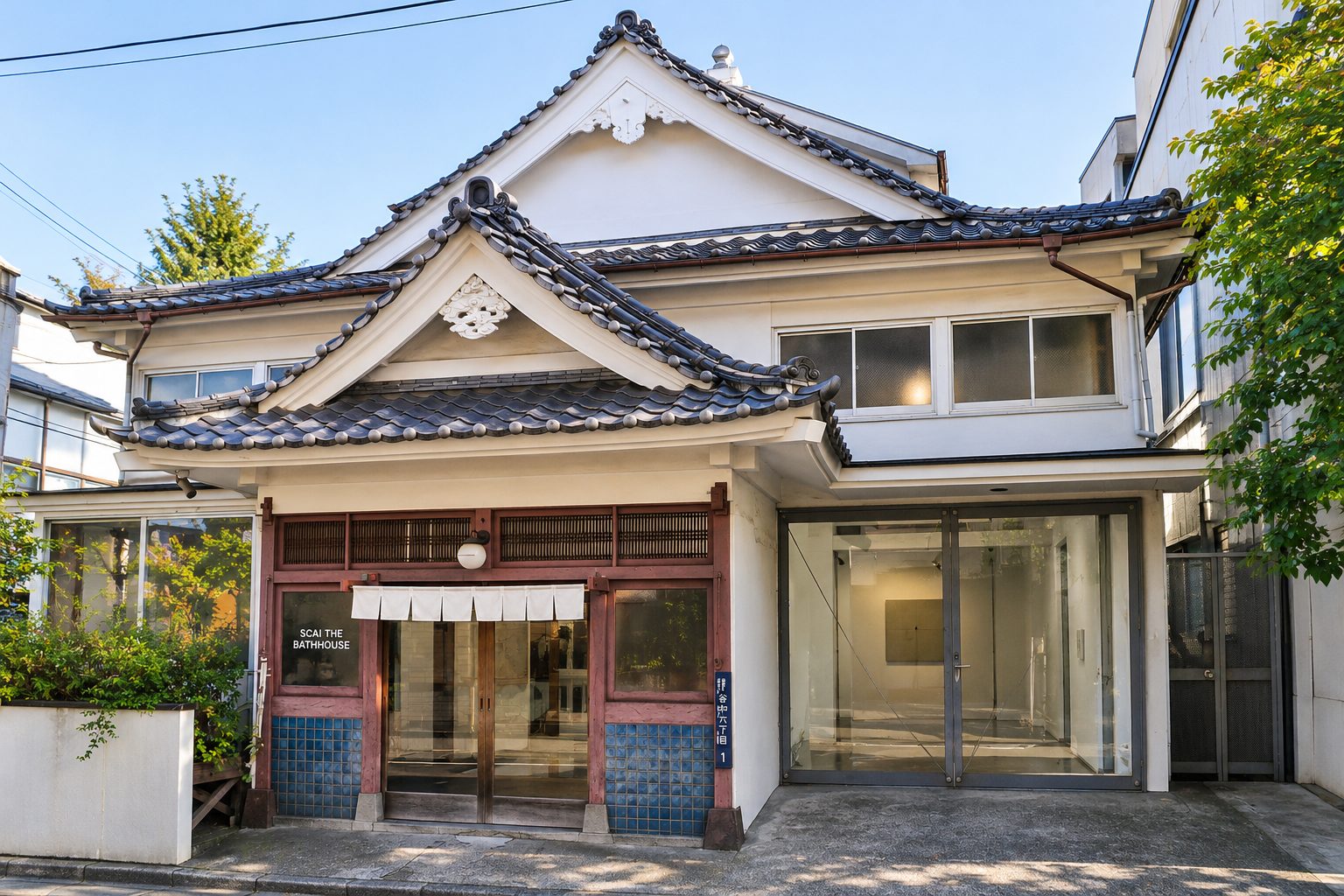
On a quiet street in Yanaka, Tokyo, stands a building that still retains its tiled roof and old bathhouse entrance.
From the outside, it looks much like a traditional Japanese public bath. Step inside, though, and you'll find something entirely different: contemporary art.
The building was once Kashiwayu, a Japanese public bath known as a sentō. Public bathhouses have long been part of everyday life in Japan. They weren't just places to bathe, but also places where neighbors would meet and talk.
Kashiwayu closed as a public bath in 1991, but the building found a new purpose.
In 1993, the theater company Dainanabyōtō used the space to stage Orugōru no Haka. That same year, the contemporary art gallery SCAI THE BATHHOUSE opened in the building.
A place where people once bathed became a setting for theater and contemporary art.
Inside, high ceilings and white walls create a space that feels very different from the traditional exterior. The contrast between the old bathhouse features and the contemporary art on display is one of the things that makes this place distinctive.
SCAI THE BATHHOUSE has presented work by artists from Japan and abroad, including Lee Ufan. Exhibitions change over time, so what you see will depend on when you visit.
If you go, take a moment to look beyond the artwork and notice the building itself.
The tiled roof, the old entrance, and the exhibition space beyond it.
It's a place where you can see how a single building has served different purposes over time.
Yanaka still has old buildings that have found new uses and remain part of the neighborhood.
SCAI THE BATHHOUSE is one of them.